In brief
Is the Panama City folklore night worth it?
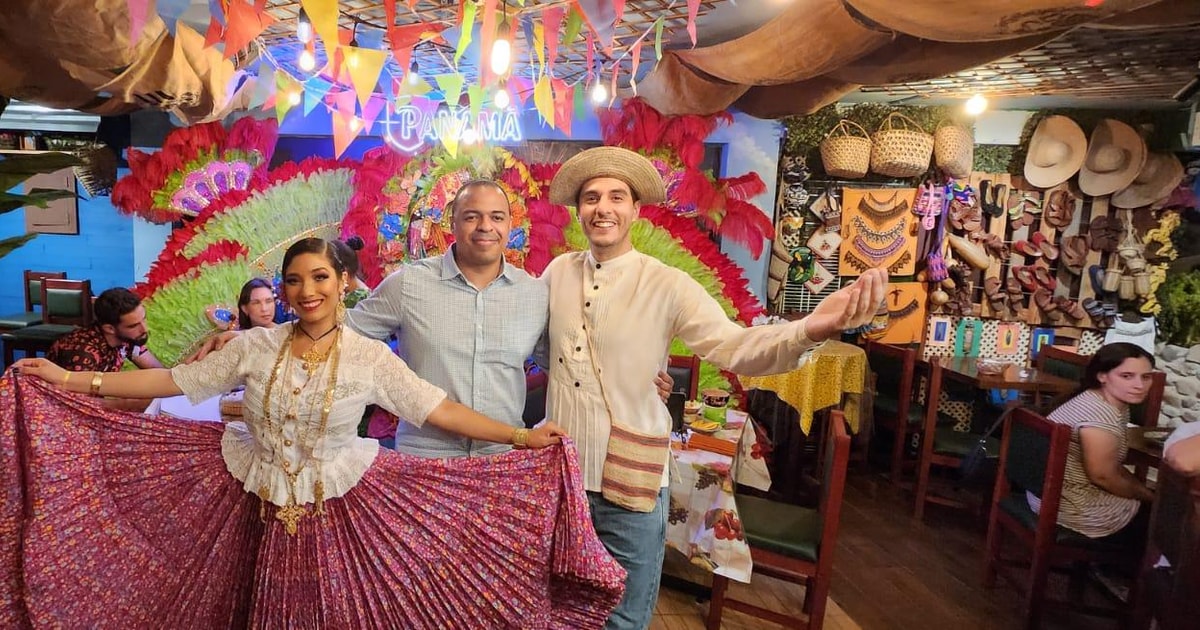
Yes, for travellers who want one evening that joins a view, a dance tradition and the old quarter without organising any of it. Guests rate it a perfect 5.0 across 29 reviews, though that is a small sample. What you buy is a transfer, a rooftop skyline stop with a drink, and a seated folkloric show in Casco Viejo, all in a group of six or fewer.
Six things to weigh
Who it suits
Travellers on a first Panama City trip, couples, and anyone who would rather meet the pollera and the drums on stage than read about them. A guide who speaks English and Spanish links the stops, and the guide's own account of the city's story is part of the booking.
Who it does not suit
Diners who want a set meal included, since dinner is optional and paid at the restaurant, and anyone after a long, dense walking tour: this is an evening of three stops, mostly seated, not a history lecture on foot.
What the small group changes
A cap of six guests keeps the van, the rooftop and the front row of the show manageable. It also explains the scarcity: when one evening holds a handful of people, a weekend can fill days ahead.
The extras
The rooftop's glass floor, zipline and swing are paid add-ons, and so is dinner. None is needed for the evening to work; budget for them only if they appeal.
How to read the rating
A 5.0 from 29 guests is encouraging and still early. Weigh it as a promising signal, then read the comparison guide if a daytime walk through the same streets is a rival for your time.
Seven stories behind the skirts and drums
Seven stories behind the skirts and the drums
A folklore night in Panama City stands on older layers: a dress that took years to make, a dance built on a drum, a quarter settled in the 17th century and a city that grew around a canal. Each card below condenses what Wikipedia says, and the note beneath names the articles.
-
The dress
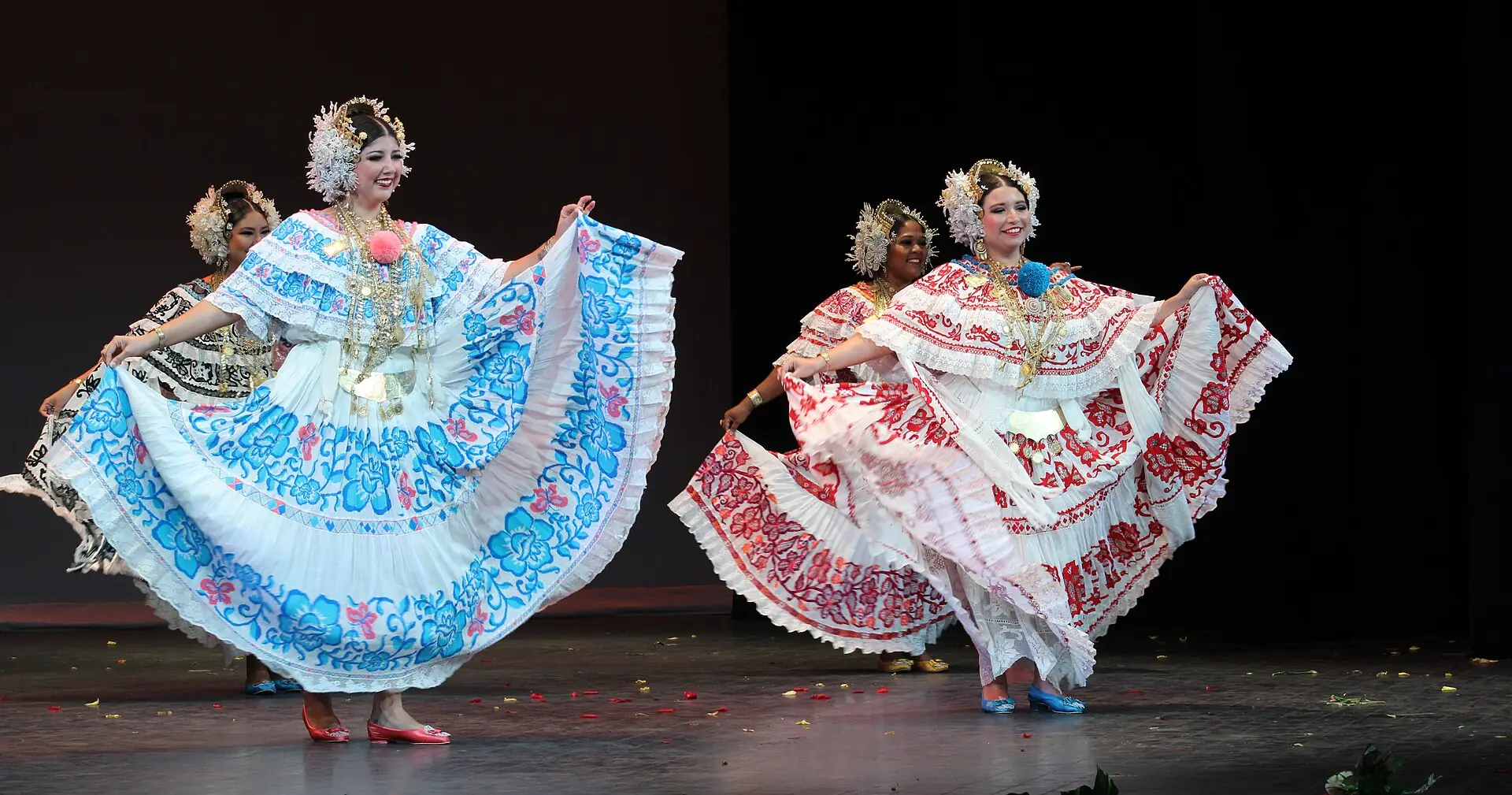
A skirt that took shape in Spanish-era Panama
Wikipedia describes the pollera as a handmade skirt and shirt that has evolved into Panama's national folk costume, and traces it to the clothing of Spanish women who arrived in the 16th and 17th centuries. The same article says it carries Indigenous, European and Afro-Antillean influences, and that it is mostly cotton and linen, usually white with colourful floral decoration. A stage full of them is a lot of handwork in one place.
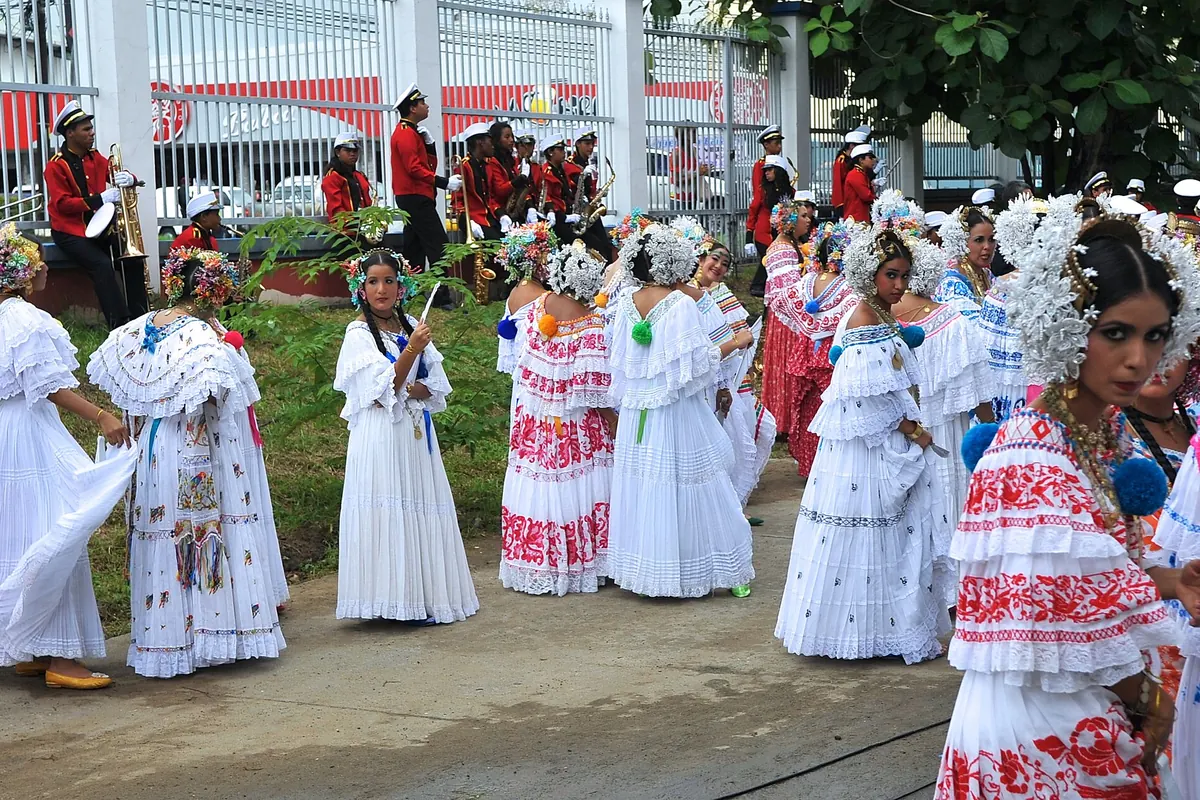
A parade of polleras with a band behind. -
The labour
Why a single pollera takes years to finish
According to Wikipedia, making one often needs one and a half to two years, and polleras are usually made to measure because a proper fit matters so much. The article separates the most ornate gala type, made with Valencian lace, from the working montuna style that began as everyday rural wear, and notes regional variants, among them a barefoot Congo style on the Caribbean side.
-
The drums
Tamborito, the little drum
Wikipedia calls the tamborito the national song and dance of Panama and dates it to the 17th century, a blend of Spanish, Amerindian and African traditions. Three hand-made drums carry it: the caja, the repujador and the repicador. A female lead singer, the cantalante, calls out and the chorus answers in clapping and four-line verses. If your dancers are joined by a drummer, that call-and-answer is what to listen for.
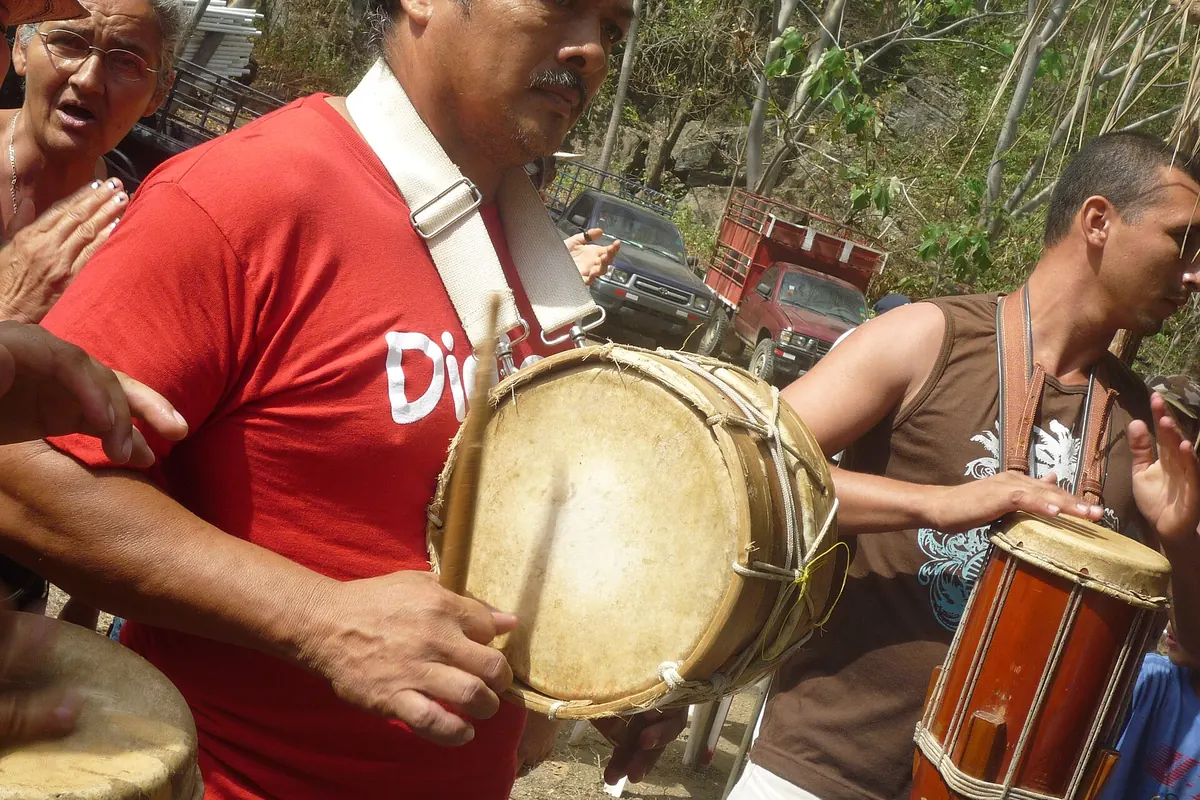
Hand-made drums at a tamborito. -
The partners
What the men wear, and how the dance goes
The same article describes the man's costume, the montuno, as a long-sleeved white-collared shirt with knee-length cotton trousers and a shallow straw hat. The dance itself is a courtship: the repicador's drum signals with three knocks, the woman answers with three curtsies, and the man kneels three times to begin. It ends with three more knocks and a cheer from the circle. Which dances your show includes is for the performers to choose, so take this as context and not a running order.
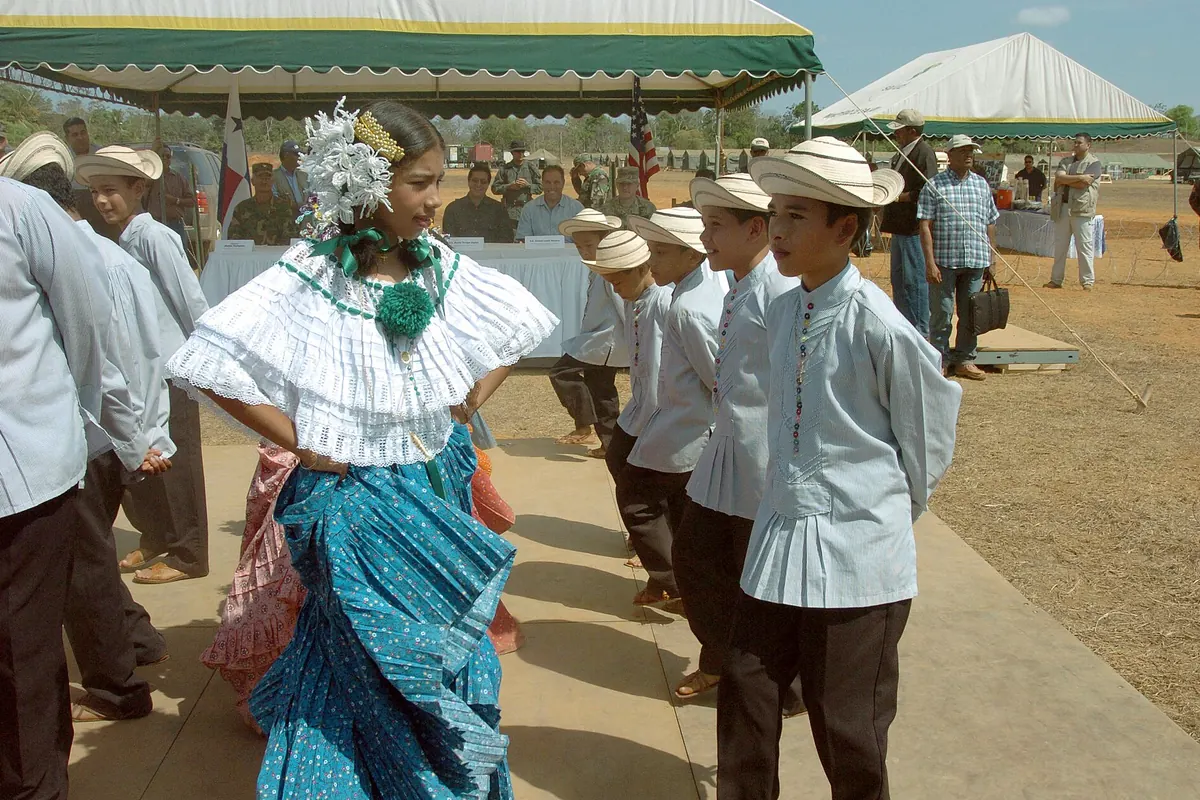
A girl in a pollera and boys in montuno shirts and straw hats. -
Beyond tamborito
Cumbia, congo and the rabel
Wikipedia's article on Panamanian music names several other living traditions. Panamanian cumbia is closely related to its Colombian cousin; congo, similar to tamborito, belongs to the Black communities of the northern Caribbean coast around Portobelo; and the three-stringed rabel violin plays cumbias, puntos and pasillos in the central provinces. Accordion-led música típica, a newer popular folk sound, has been part of the scene since the 1940s. Any of these might colour a folk evening, though the booking page does not list them.
-
The old quarter
Casco Viejo, settled in 1673
Wikipedia says Casco Viejo, also called Casco Antiguo, was completed and settled in 1673 on a peninsula cut off by the sea and protected by walls, after the first city was nearly destroyed in 1671. Three large fires in the 18th century changed its layout, and its present form comes mostly from the final years of the 1800s and the early decades of the 1900s. The article also notes that it mixes colonial, neoclassical and Afro-Antillean buildings, which is part of what you walk past on the way to the show.
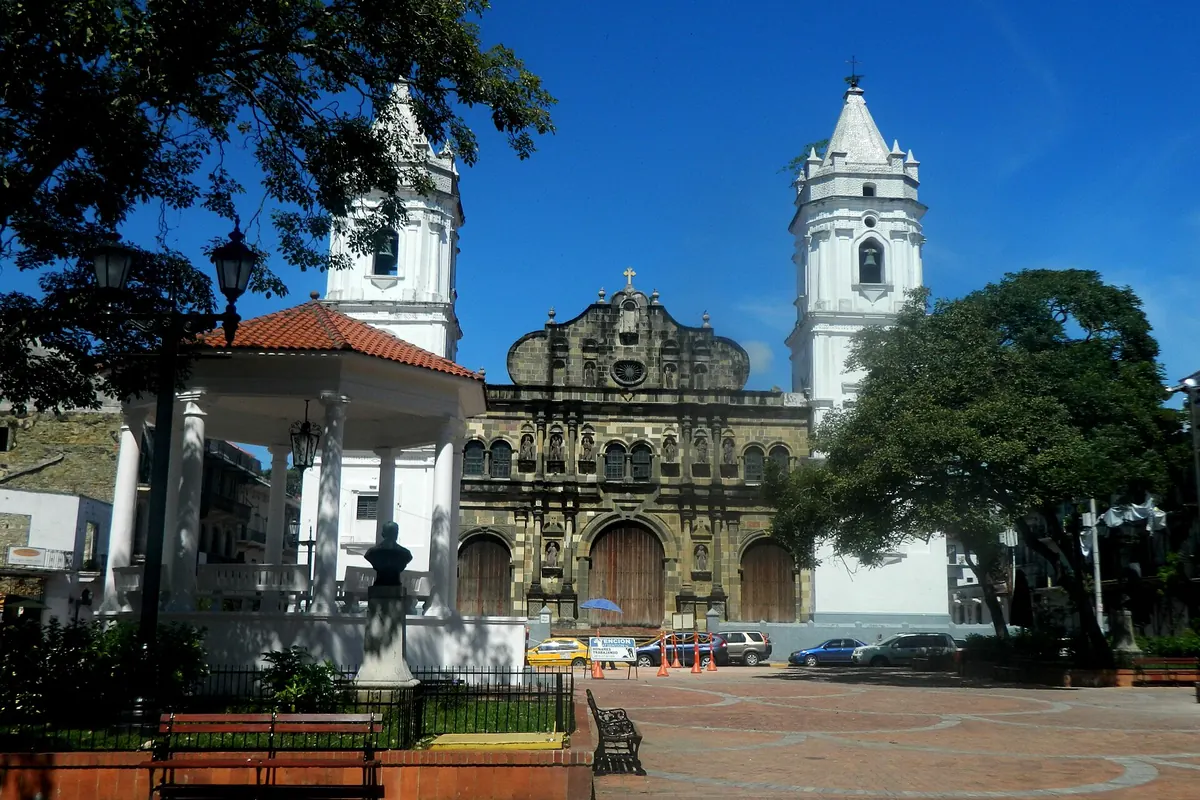
The cathedral square in Casco Viejo. -
The city
From the gold route to a canal and a crowded skyline
Wikipedia gives 15 August 1519 as the founding date of Panama City, under Pedro Arias Dávila, and describes it as a staging point for gold and silver bound for Spain. The canal was inaugurated on 15 August 1914, and the newer districts have since grown a very dense line of high-rises, which the same article links to land reclaimed along the Cinta Costera. The rooftop stop on your evening looks across that skyline and the bay.
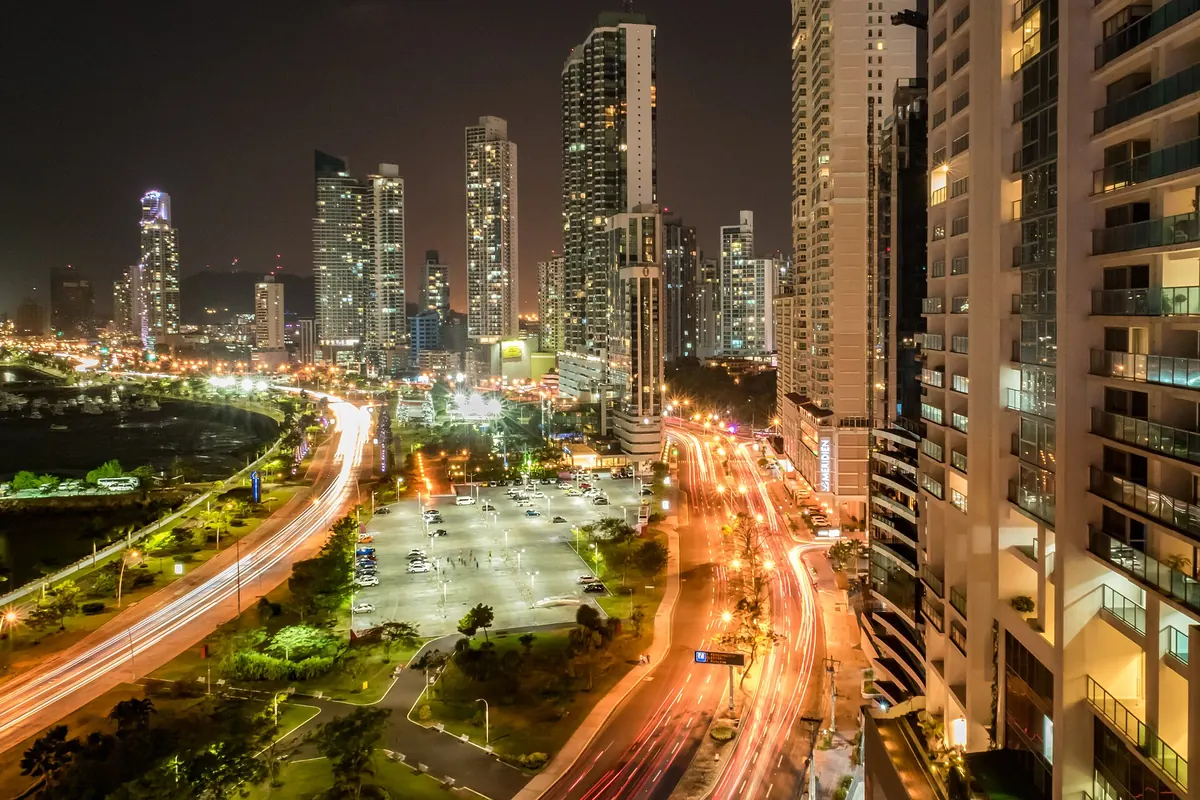
The skyline at night, with traffic trails on the coast road.
Sources: Wikipedia on the pollera, the tamborito, the music of Panama, Casco Viejo, Panama City and the Panama Canal. Dates and descriptions are as those articles state them.
Panama City, in dates
Panama City in eight dates
- 15 August 1519
Wikipedia says Pedro Arias Dávila founded Panama City on this date.
Why it matters tonight: The first city stood elsewhere; its ruins are now the site called Panamá Viejo.
- 1671
Wikipedia dates the sacking of the first city by the privateer Henry Morgan to 28 January 1671, with fire consuming it.
Why it matters tonight: It is why the old quarter you visit is not where the city began.
- 21 January 1673
Wikipedia gives this as the date the city was refounded on a peninsula about 8 km from the first site.
Why it matters tonight: Casco Viejo starts here, on a walled peninsula by the sea.
- 18th century
Wikipedia's Casco Viejo article reports three large fires that partly destroyed the district and changed its layout.
Why it matters tonight: It explains why the quarter's present look comes mostly from the final years of the 1800s and the early decades of the 1900s.
- 3 November 1903
Wikipedia records the declaration of independence from Colombia on this date.
Why it matters tonight: The republic whose folk dress the dancers wear is more than a century old.
- 15 August 1914
Wikipedia dates the canal's inauguration to this day.
Why it matters tonight: The waterway turned the city back into a crossroads of world shipping.
- 1997
Wikipedia's Panamá Viejo article dates the UNESCO World Heritage listing to 1997, with an extension in 2003.
Why it matters tonight: The quarter around the show is part of a World Heritage property.
- Today
Wikipedia describes a very dense skyline of high-rises in the newer districts.
Why it matters tonight: This is the view from the rooftop stop.
Reading the booking page closely
What the booking page covers, and where it stops
Six points drawn from the booking page on 19 November 2026. Gaps are flagged for your confirmation, not filled in.
Open the calendar ↗The lowest fare found when this page was checked. Pick a date and the calendar shows what you would pay, in your currency.
- The route
- A rooftop viewpoint over the lit skyline and the bay comes first, then a folkloric dance show in Casco Viejo. The page does not name the rooftop or the venue, and the exact running order is shown after booking.
- The show
- Reserved seating, colourful costumes, live music and dancing; guests may be invited to join. The page does not list a repertoire, so which dances you see is not promised.
- The group
- A small group of up to six guests. A licensed bilingual guide, in English and Spanish, tells the story of Panama City along the way.
- Transport
- An air-conditioned vehicle carries the group between stops. Which meeting point applies to your booking is on your confirmation.
- Food and drink
- One traditional drink on the rooftop is a courtesy. Dinner at the restaurant is optional and at your own cost, and the page quotes a typical figure that this guide does not repeat, since menus move.
- Extras and limits
- The rooftop's glass floor, zipline and swing are paid add-ons. The booking page shows free cancellation and reserve-now-pay-later, and it is the place to confirm age limits or other conditions.
Dancers or a street of legends
A folklore night or a Casco Viejo legends walk: which Panama City evening?
Book the dance night, then fill the other Panama days
Other Panama City bookings to set beside it
The folklore night fills one evening. Three more Panama City options sit beside it: a legends walk through the old quarter, a canal half-day and a day with an Embera community. Ratings and prices come from the live feed.
- See dates ↗
Panama City by night: rooftop, folklore show and culture
The evening this page is about: a transfer by air-conditioned vehicle, a rooftop over the lit skyline with a courtesy drink, then a folkloric dance show in Casco Viejo with reserved seating, in a group of at most six.
- See dates ↗
Legends and hidden gems of Casco Viejo walk
A guided walk through the old quarter's stories, going by its title. The closest rival for an evening in the same neighbourhood.
- See dates ↗
Panama City and canal half-day tour
A half-day that pairs the city with the canal, going by its title. It suits a daytime slot, leaving the night free for the dancers.
- See dates ↗
Embera village and waterfall tour with lunch
A full-day outing to an Embera community and a waterfall, with lunch named in its title. A long day out of the city, rated by well over two thousand guests.
Also bookable around Panama City
Shaping the evening
Four things to settle before the evening
Pick a date
Open the calendar and choose from the dates shown. With six places an evening, the date you want may be gone; if so, try the nights either side.
Decide on dinner
Dinner at the restaurant is optional and paid on the spot. If you want it, plan it into the evening; if you do not, eat beforehand.
Dress for dancing
Guests may be invited to join the dancers, so choose clothes and footwear that let you move. Layers help, since the rooftop is open to the evening air.
Read the confirmation
Your confirmation restates the date and the meeting details. It, not this page, has the last word on where and when the vehicle collects the group.
Polleras, drums and the old quarter
Polleras, drums and the old quarter
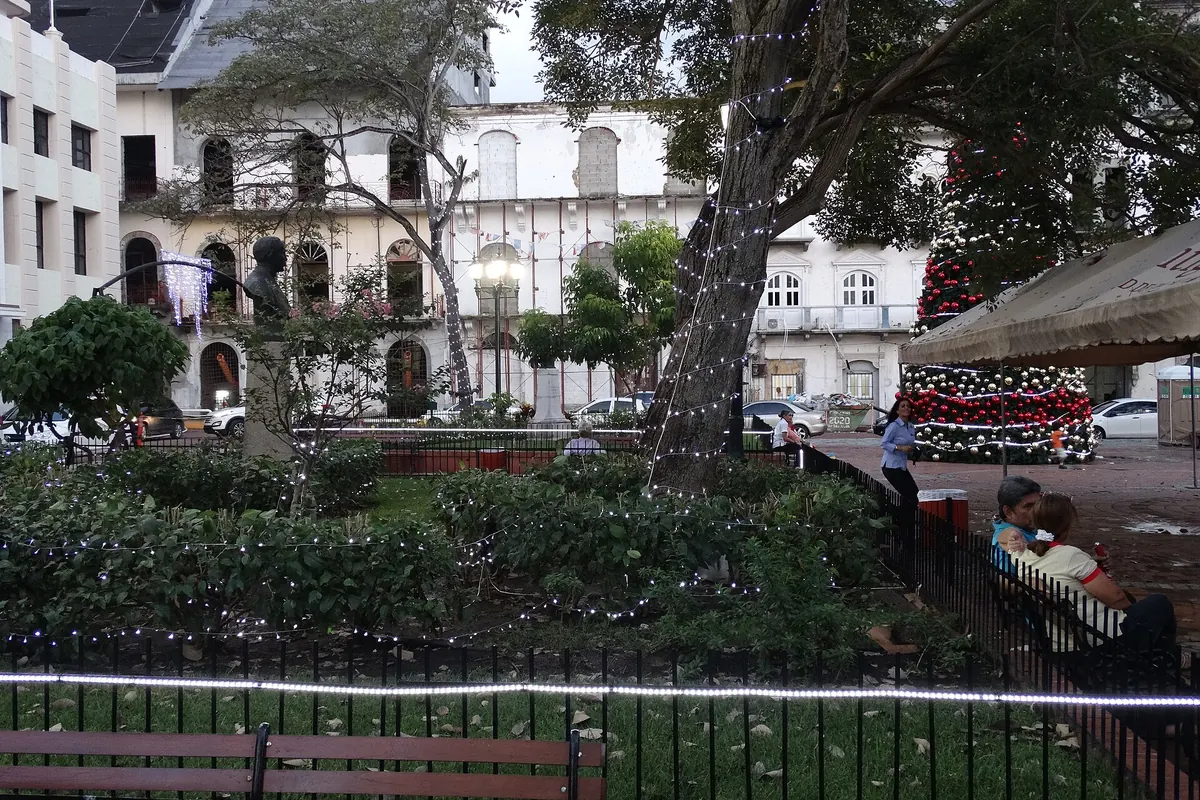
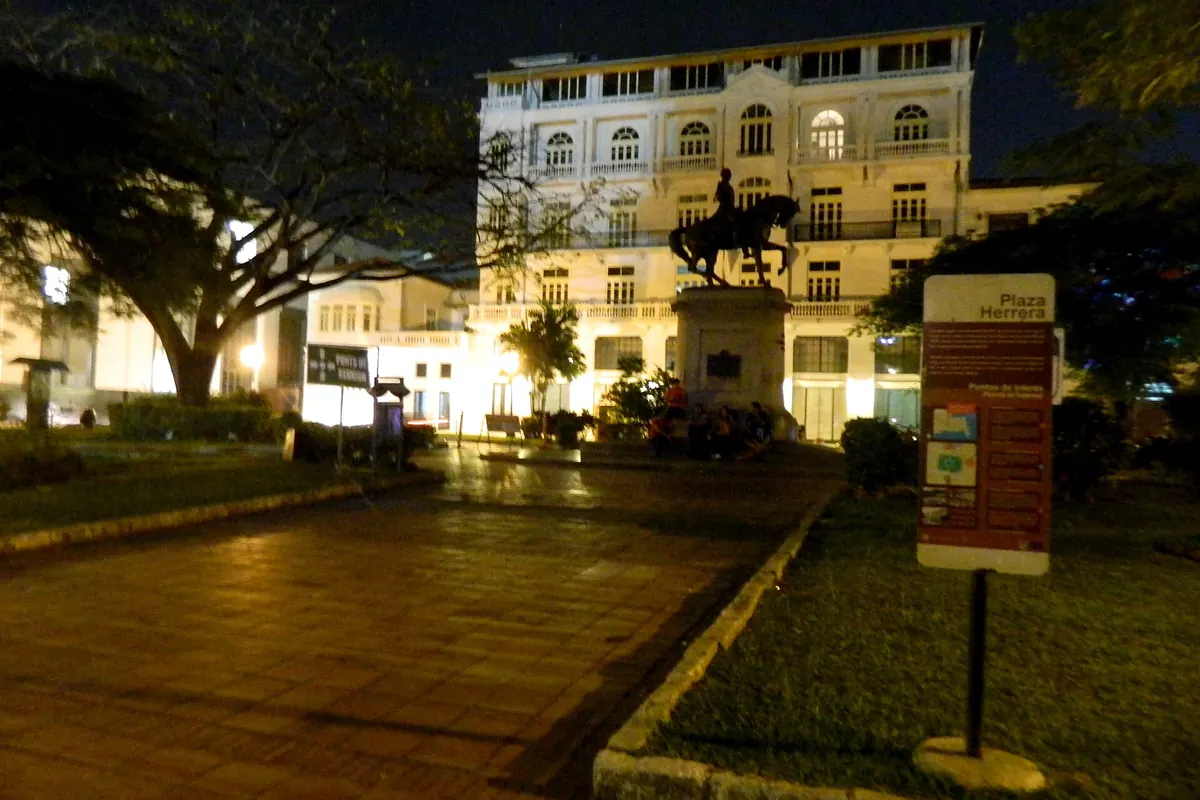
Real photographs from Wikimedia Commons: dancers in polleras on stage and in the street, drummers, the cathedral square, a Casco Viejo plaza at dusk and the night skyline.
Longer reads
Six reads on the dress, the dances and the old city
- Start here Is the Panama City folklore night worth it? What a 5.0 from 29 guests shows, and what it leaves open Straight talk on a small-group evening of rooftop views and pollera dances in Casco Viejo: what the booking covers, what costs extra and who gets most from it. Read →
- The comparison A folklore night or a Casco Viejo legends walk: which Panama City evening? Two ways to spend a Panama City evening in the same old quarter: a seated folkloric show with a rooftop view, or a guided walk through the streets' legends. Where they differ and who each suits. Read →
- The dress The pollera, Panama's national dress, explained What the pollera is, where it comes from, why one can take years to make and where you are most likely to see it worn, from sources you can check. Read →
- The dances Tamborito, cumbia and congo: Panama's folk dances The tamborito and its three drums, the call-and-answer of the cantalante, and the other folk sounds of Panama, drawn from published sources. Read →
- The old quarter Casco Viejo: settled in 1673, now a World Heritage quarter How Panama City's old quarter came to be on a walled peninsula, what stands there today and what its heritage listing covers. Read →
- The city How Panama City grew: from Panamá Viejo to the skyline A short, sourced history of the city you see from a rooftop: the 1519 founding, the 1671 sack, the canal and the reclaimed land under the towers. Read →
FAQ
Questions worth settling before you choose a night
Is the Panama City folklore night worth it?
Yes for most newcomers: it holds 5.0 from 29 reviews on GetYourGuide and joins a rooftop view, a dance tradition and the old quarter into one evening for six guests at most. The sample is small, so read the comparison guide if you cannot decide between this and a daytime walk.
Is dinner included?
No. Dinner at the restaurant is optional and paid at your own cost. One traditional drink on the rooftop is a courtesy of the booking, and the glass floor, zipline and swing are paid extras.
How many people are in the group?
At most six guests, according to the booking page. That is why evenings fill quickly, especially at weekends.
Which languages does the guide speak?
English and Spanish, with a licensed guide who tells the story of Panama City along the way.
Do I have to dance?
The page says guests may be invited to join the dancers. It does not say you must, so sitting back and watching is a fair reading of it.
What is a pollera?
Panama's national folk costume: a handmade skirt and shirt, usually white cotton or linen with colourful floral work. Wikipedia says one often needs one and a half to two years of work. The guide on the pollera tells the rest.
Is transport included?
Transfers by air-conditioned vehicle are part of the booking. Your confirmation shows the meeting details for your date.
Can I cancel?
Free cancellation and reserve-now-pay-later are shown on the booking page; the cut-off is on your own booking, so read it there.
What else is worth booking nearby?
A legends walk through Casco Viejo, a canal half-day or a day with an Embera community, all in the cards on this page. Each has its own calendar and rating.