The dress
The pollera, Panama's national dress, explained
What the pollera is, where it comes from, why one can take years to make and where you are most likely to see it worn, from sources you can check.
Reserve your evening ↗Quick answer
The pollera is a handmade skirt and shirt that Wikipedia says has evolved into Panama's national folk costume. It is usually white cotton or linen with colourful floral work, and it comes in a formal gala form and plainer working forms. Dancers wear it for folk performances, and it is the costume you will see at a Panama City folklore night.
The pollera at a glance
| Topic | What Wikipedia says |
|---|---|
| What it is | A handmade skirt and shirt, the national folk costume |
| Origins | Traced to the dress of Spanish women arriving in the 16th and 17th centuries, with Indigenous, European and Afro-Antillean influences |
| Cloth | Mostly cotton and linen, usually white with colourful floral decoration |
| Time to make | Often between one and a half and two years |
| Gala type | The most ornate, made with Valencian lace |
| Working type | The montuna, originally for rural activity |
What a pollera is
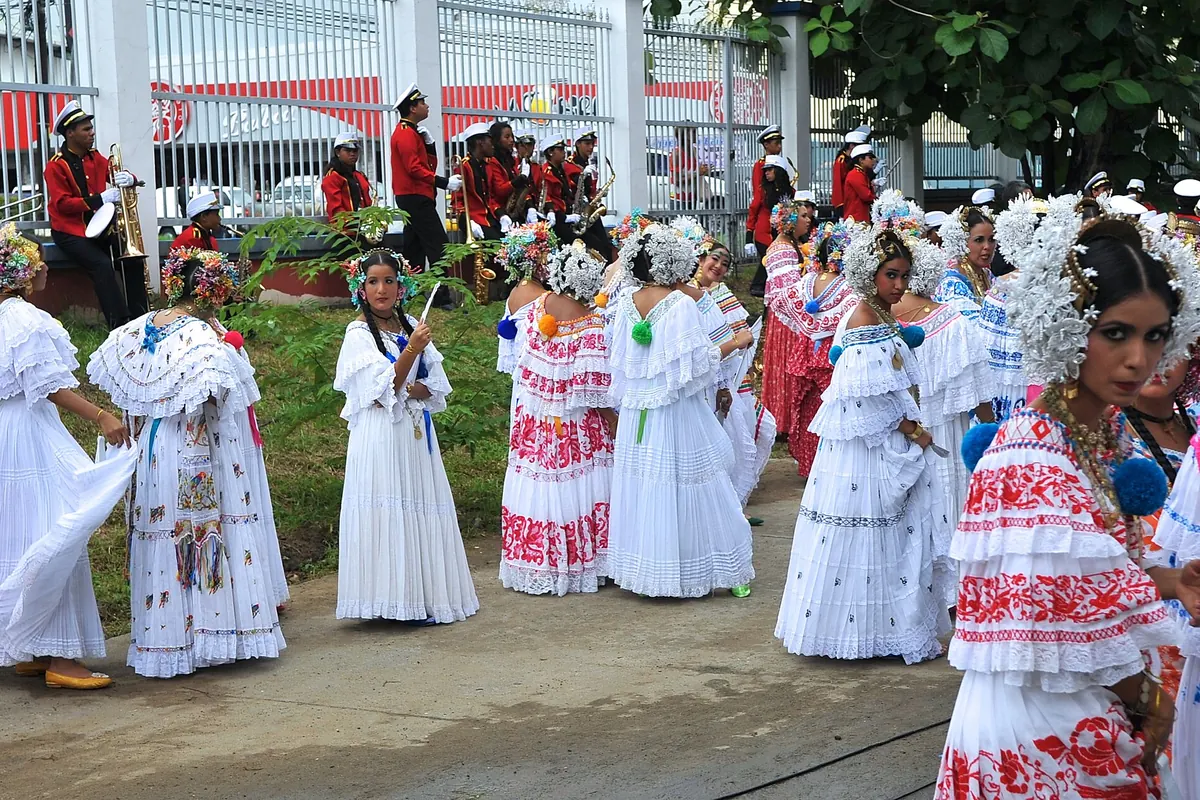
Wikipedia describes the pollera as a handmade skirt and shirt that has evolved into the national folk costume of Panama, and calls it one of the most elaborate traditional garments in the Americas. It is made mostly of cotton and linen and is usually white, with colourful floral embellishment. A complete outfit is more than cloth: it can include a shawl, a fan, hair ornaments and gold-plated chains.
Where it comes from
The article traces its origins to the clothing of Spanish women who arrived in Panama in the 16th and 17th centuries, adapted over time and reflecting Indigenous, European and Afro-Antillean influences. That layered ancestry is why the pollera is described as a national costume and not only a Spanish import: it grew up in Panama, in the hands of Panamanian makers.
The parts and the finishing
Beyond skirt and shirt, Wikipedia lists a shawl called the mantón, a fan, sets of hair combs, and tembleques, the trembling hair ornaments adorned with pearls and crystals. It also mentions gold-plated silver chains, and solid gold for the most costly versions. Together these turn a white dress into a full festive costume, and they are why dancers on stage look so different from everyday dress.
Gala, montuna and the regional types
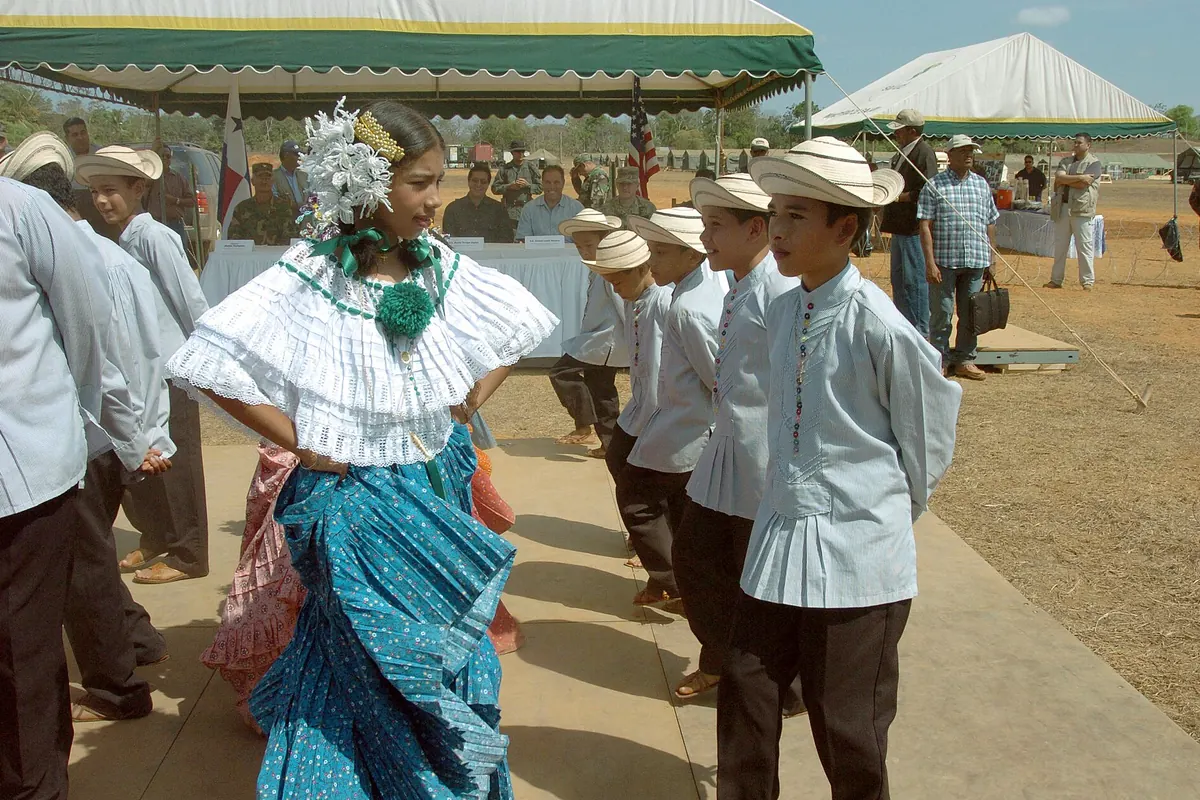
The article groups polleras into formal gala and working types. The pollera de gala is the most ornate, made with Valencian lace, and is worn at occasions such as weddings and quinceañeras. The montuna was originally worn for rural work and varies by region. Wikipedia also describes a Congo style in the Afro-Panamanian tradition, especially around Colón, danced barefoot, and a striped style associated with Villa de Los Santos.
Why one takes so long to make
According to Wikipedia, making a pollera often needs one and a half to two years, and they are usually made to measure because fit is considered essential. That is a long time for one garment, and it explains why polleras are treated as heirlooms and why a stage full of them represents a great deal of work.
Where to see it worn
Wikipedia says the Desfiles de las Mil Polleras in Las Tablas take place every January, a parade of the costume on a grand scale. For a visitor to Panama City, the easier way is a folkloric performance, where dancers wear the pollera as intended, with the music and steps it was made to move with. A folklore night in Casco Viejo is exactly that.
The pollera in the tamborito
Wikipedia's tamborito article describes the women's costume as the pollera, an embroidered gown with ruffles, pom-poms and lace, worn with gold hairpins and a shell headpiece that resembles a crown, and says it is reserved for festival occasions. Beside it, the men wear the plain montuno. The contrast between the lavish skirt and the simple shirt and straw hat is part of what the dance shows.
What to look for on stage
A few details repay a glance. Notice how wide the skirt spreads when a dancer spins, since the dance works the cloth as part of the movement. Look for the lace trim and the floral work on the white ground, the shawl and the fan if they are carried, and the hair ornaments catching the light. Those are the elements the sources list, and seeing them in motion is the reason to watch the costume performed rather than in a museum case.
Frequently asked questions
Is the pollera only for dancing?
No. Wikipedia describes it as the national folk costume, with a formal gala form worn at occasions such as weddings and quinceañeras, as well as working types.
How long does a pollera take to make?
Wikipedia says often between one and a half and two years.
Where is the big pollera parade?
Wikipedia places the Desfiles de las Mil Polleras in Las Tablas, every January.
Sources