The dances
Tamborito, cumbia and congo: Panama's folk dances
The tamborito and its three drums, the call-and-answer of the cantalante, and the other folk sounds of Panama, drawn from published sources.
Reserve your evening ↗Quick answer
The tamborito is the dance to know. Wikipedia calls it the national song and dance of Panama, a courtship danced to three hand-made drums, a lead singer and a clapping chorus. Cumbia, congo, the rabel and accordion-led típico belong to the same folk family, and a folklore night may draw on any of them, though no programme is promised.
Panama's folk music at a glance
| Form | What Wikipedia says |
|---|---|
| Tamborito | National song and dance; three drums; lead singer and chorus; courtship dance |
| Cumbia | Closely related to Colombian cumbia; amanojá and atravesao styles popular at home |
| Congo | Similar to tamborito; popular in Black communities of the northern coast, including Portobelo |
| Rabel | A three-stringed violin used for cumbias, puntos and pasillos |
| Típico | Contemporary folk sound, with accordion central since the 1940s |
The tamborito, the little drum
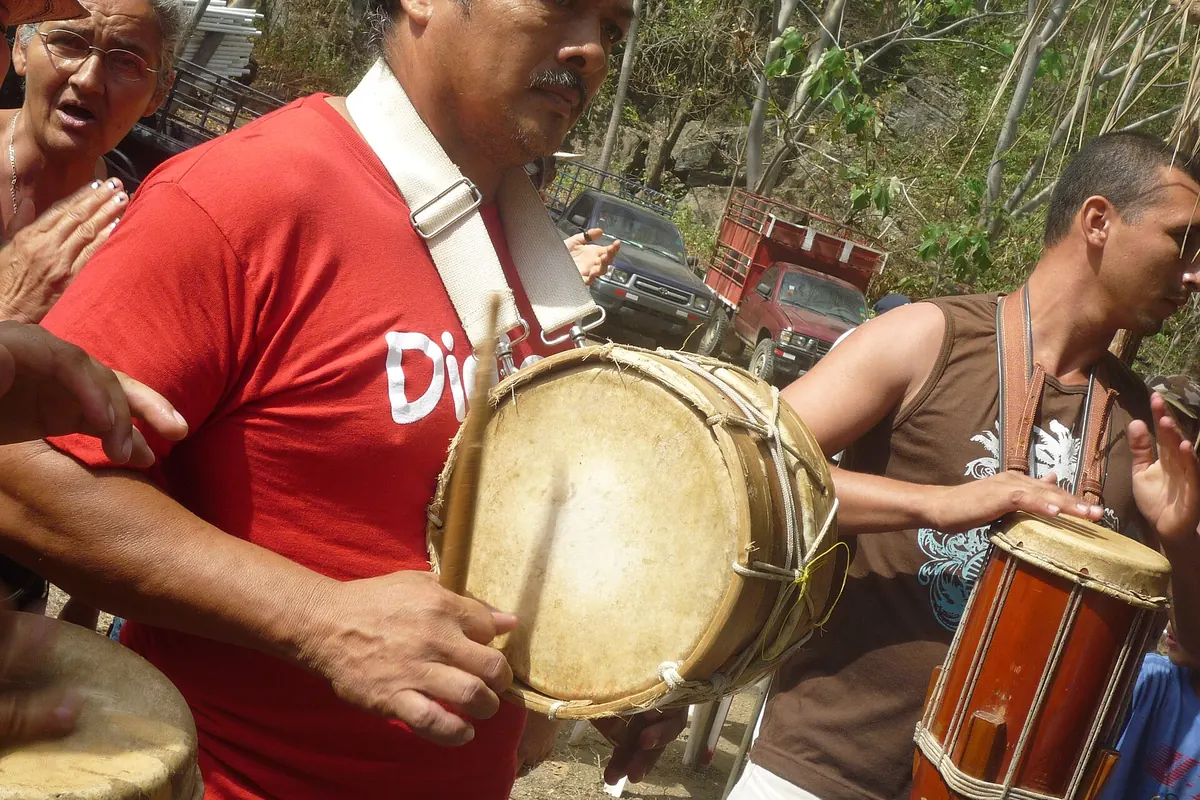
Wikipedia translates tamborito as the little drum, and says the genre dates to at least the 17th century as a hybrid of Spanish, Amerindian and African cultures. It calls it the national song and dance of Panama. Three locally made drums, hollowed from tree trunks and covered with tanned cowhide, carry it: the caja, the repujador and the repicador.
Call and answer
A female singer, the cantalante, leads, and the surrounding group answers by clapping and singing four-line verses called coplas. This call-and-answer is the engine of the dance: it is why tamborito sounds communal and why bystanders often join in. Wikipedia adds that the lyrics are repetitive and carry popular commentary on desire and attraction.
The dance as courtship
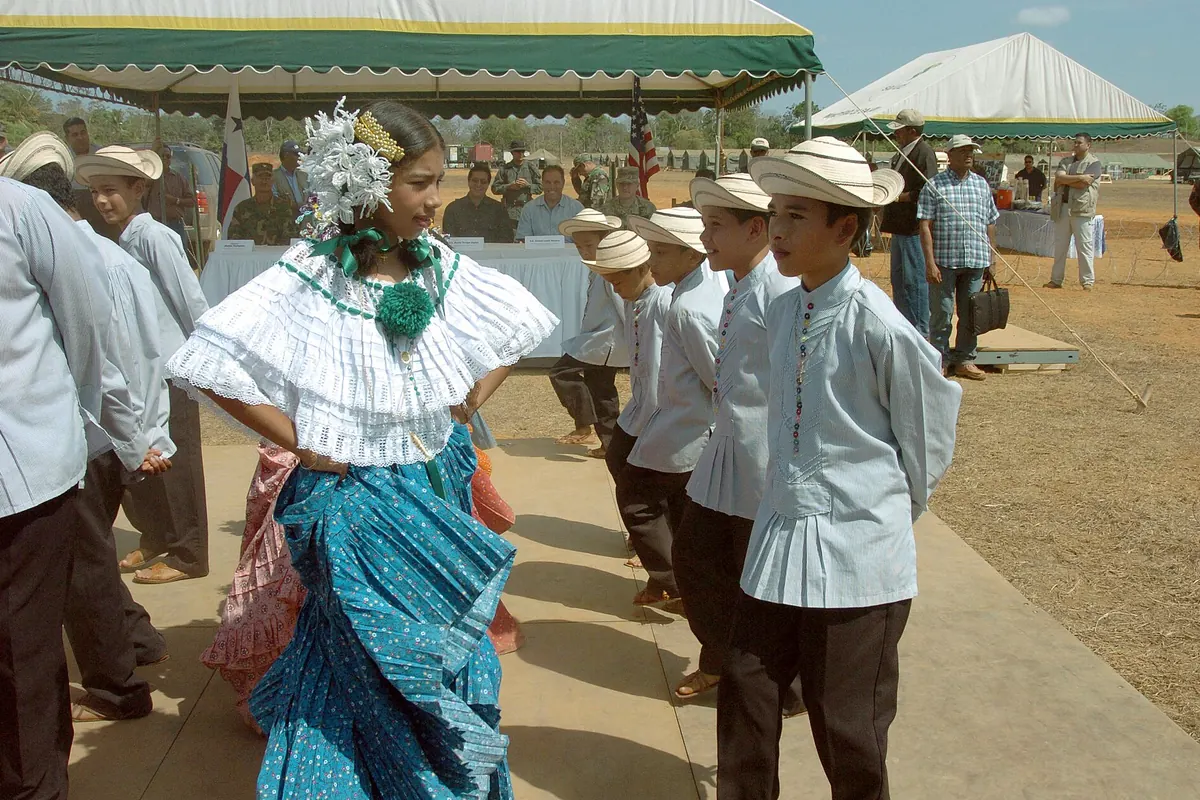
The dance is a courtship between a man and a woman. According to Wikipedia, the repicador signals with three knocks, the woman responds with three curtsies and a final twirl, and the man kneels three times to begin. The woman works her skirt and the man holds his arms protectively. The dance ends with three more knocks, a curtsey and a cheer from the crowd.
Costume and setting
Women wear the pollera, with gold hairpins and a shell headpiece resembling a crown, reserved for festival occasions. Men wear the montuno: a long-sleeved white-collared shirt, knee-length cotton trousers and a shallow straw hat. The tamborito is mainly performed at festivals, especially Carnival, with the crowd forming a circle around the dancers.
Cumbia, congo and the rabel
Wikipedia's article on Panamanian music describes panamanian cumbia as closely related to its Colombian cousin, with amanojá and atravesao styles popular at home. Congo is described as somewhat similar to tamborito and belonging to Black communities of the northern coast, including Portobelo. The three-stringed rabel violin is used for cumbias, puntos and pasillos in the central provinces.
Típico and the newer folk sound
Contemporary popular folk, often called música típica or pindín, has included the guiro, the conga and above all the accordion since the 1940s, according to the same article. It is the sound of village celebrations and dance halls more than the stage, and a useful reminder that folk music in Panama is still being played, not only preserved.
What to watch and hear for
If a dance in the tamborito style appears, listen for the drum signal of three knocks and the answer of the chorus, and watch the woman's curtsies and the man's three kneelings. The rhythm is described as having African influence, and the clapping falls twice per measure, which makes it easy to follow along. Nothing here requires prior knowledge, but knowing the pattern helps.
Where the tamborito is danced
Wikipedia says the tamborito is mainly performed at Panamanian festivals, especially the Panama Carnival, in front of large crowds that form a circle around the performers and often join the percussion and the dance. That participatory character is why a staged folklore evening, where guests may be invited to join, fits the tradition well.
Frequently asked questions
What is the tamborito?
Wikipedia calls it the national song and dance of Panama, performed to three drums with a lead singer and a clapping chorus.
Will I see it at a folklore night?
The booking page promises costumed dancers, live music and dancing, but does not list the dances, so the tamborito is possible and not promised.
What is a cantalante?
The female lead singer of a tamborito, who calls out the verses.
Sources