The old quarter
Casco Viejo: settled in 1673, now a World Heritage quarter
How Panama City's old quarter came to be on a walled peninsula, what stands there today and what its heritage listing covers.
Reserve your evening ↗Quick answer
Casco Viejo, also called Casco Antiguo, is the district Wikipedia says was completed and settled in 1673 after the first Panama City was nearly destroyed in 1671. It sits on a peninsula once protected by walls, mixes colonial, neoclassical and Afro-Antillean buildings, and belongs to a UNESCO World Heritage property that Wikipedia dates to 1997.
Casco Viejo in brief
| Topic | What the sources say |
|---|---|
| Settled | Completed and settled in 1673 (Wikipedia) |
| Site | A peninsula isolated by the sea and protected by walls |
| Fires | Three large fires in the 18th century changed its layout |
| Present look | Dates from the end of the 19th century and the first half of the 20th |
| Heritage | Part of a UNESCO World Heritage property with Panamá Viejo (Wikipedia: listed 1997, extension 2003) |
Why the old quarter is not the first city
The first Panama City stood a few kilometres away, at the site now called Panamá Viejo. Wikipedia says it was destroyed in 1671 by the Welsh privateer Henry Morgan and a fire. The city was rebuilt on a different site, which the Panama City article dates to 21 January 1673, about 8 km from the original. That rebuilt city is what we now call Casco Viejo.
A walled peninsula
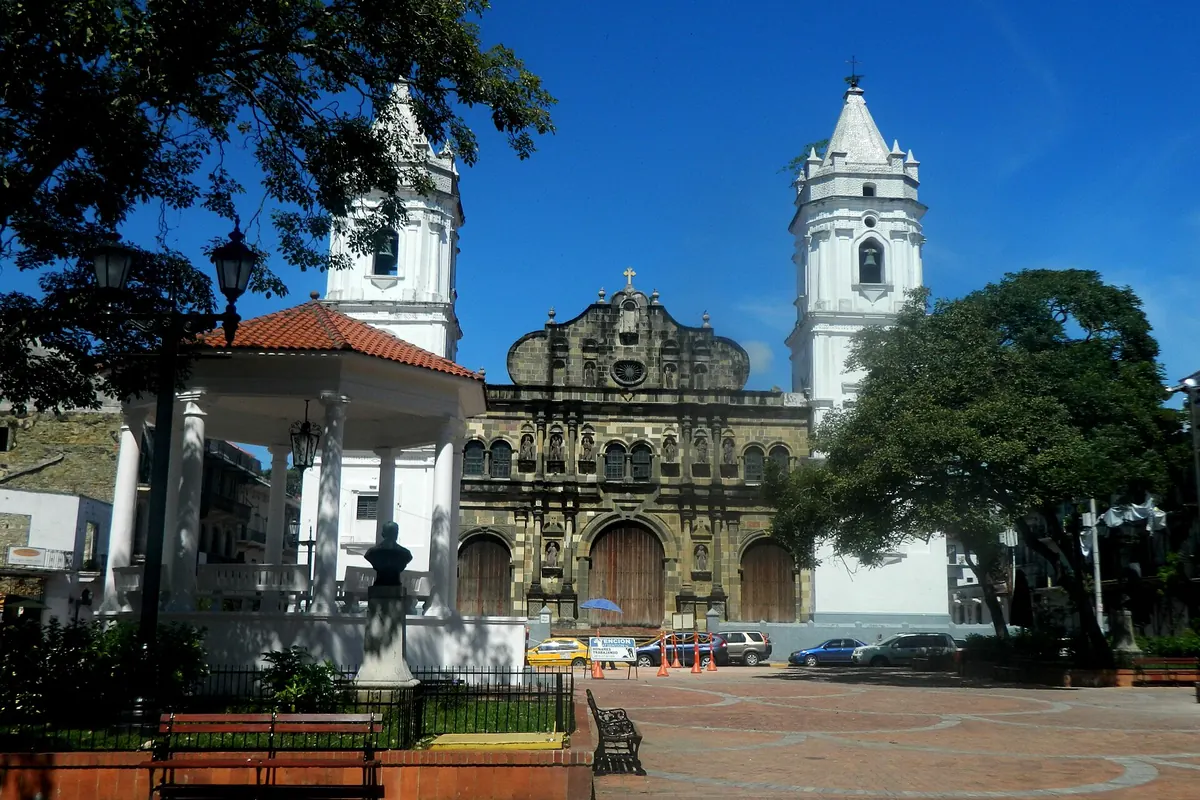
Wikipedia's Casco Viejo article says the district was built on a peninsula isolated by the sea and protected by walls. That setting is why the quarter has a compact, enclosed feel, with plazas packed into a small area and the water close on several sides.
Fires and the present look
The article reports three large fires in the 18th century that partly destroyed the district and altered its layout. The current configuration dates from the end of the 19th century and the first half of the 20th, when reconstruction added neoclassical and Afro-Antillean buildings among the ruins and colonial structures. That mix, the article says, distinguishes it from colonial-style old towns such as Cartagena de Indias and Quito.
What stands there
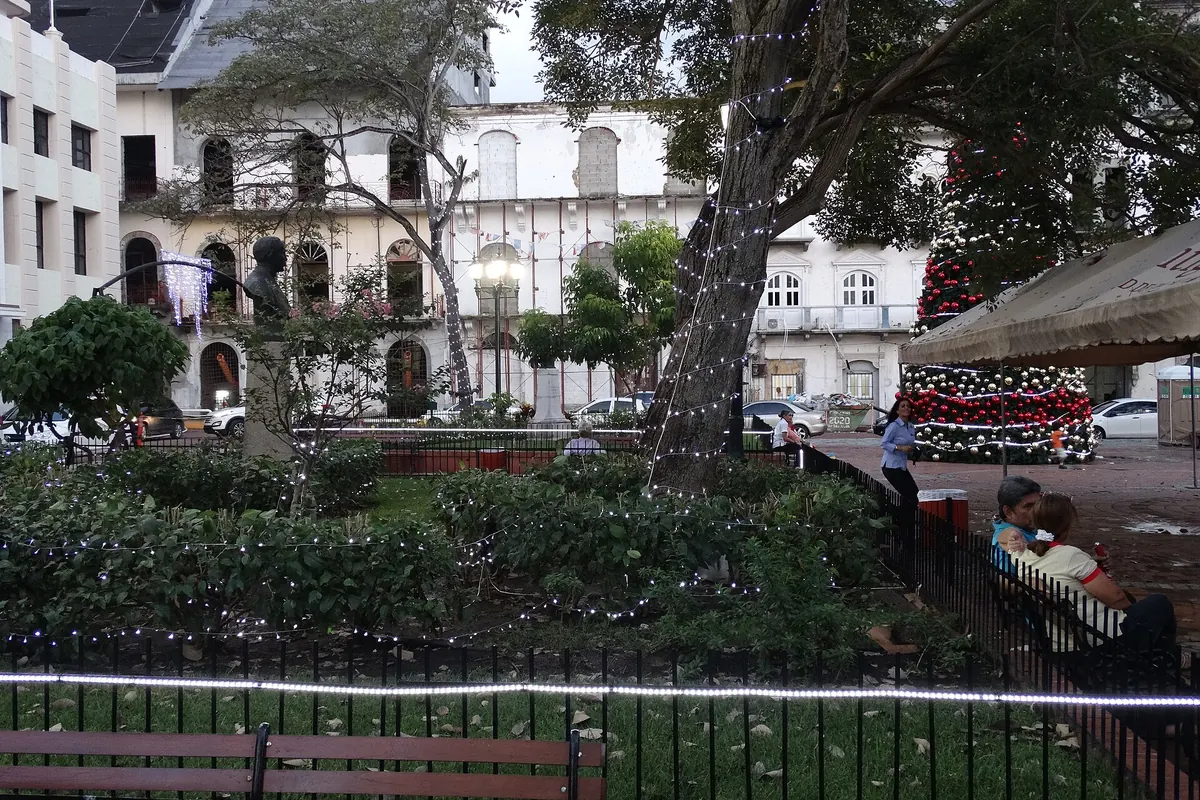
Wikipedia lists the Catedral Metropolitana, the Palacio de las Garzas, which is the presidential office and residence, the Teatro Nacional, the Arco Chato, the Palacio Municipal and the Casa Góngora among its landmarks, with plazas named Bolívar, Herrera, de Francia and de la Independencia. It also notes that in recent years the district has become a tourist hotspot with restaurants, boutique hotels, museums and nightclubs.
The heritage listing
UNESCO's World Heritage list includes the Historic District of Panamá with the Salón Bolívar, and Wikipedia's Panamá Viejo article gives 1997 for the listing and 2003 for an extension. The property is now described as the Archaeological Site of Panamá Viejo and the Historic District of Panamá, linking the first city's ruins with the later quarter. For a visitor, it means the streets around a Casco Viejo evening are part of a recognised World Heritage property.
The plazas as a map
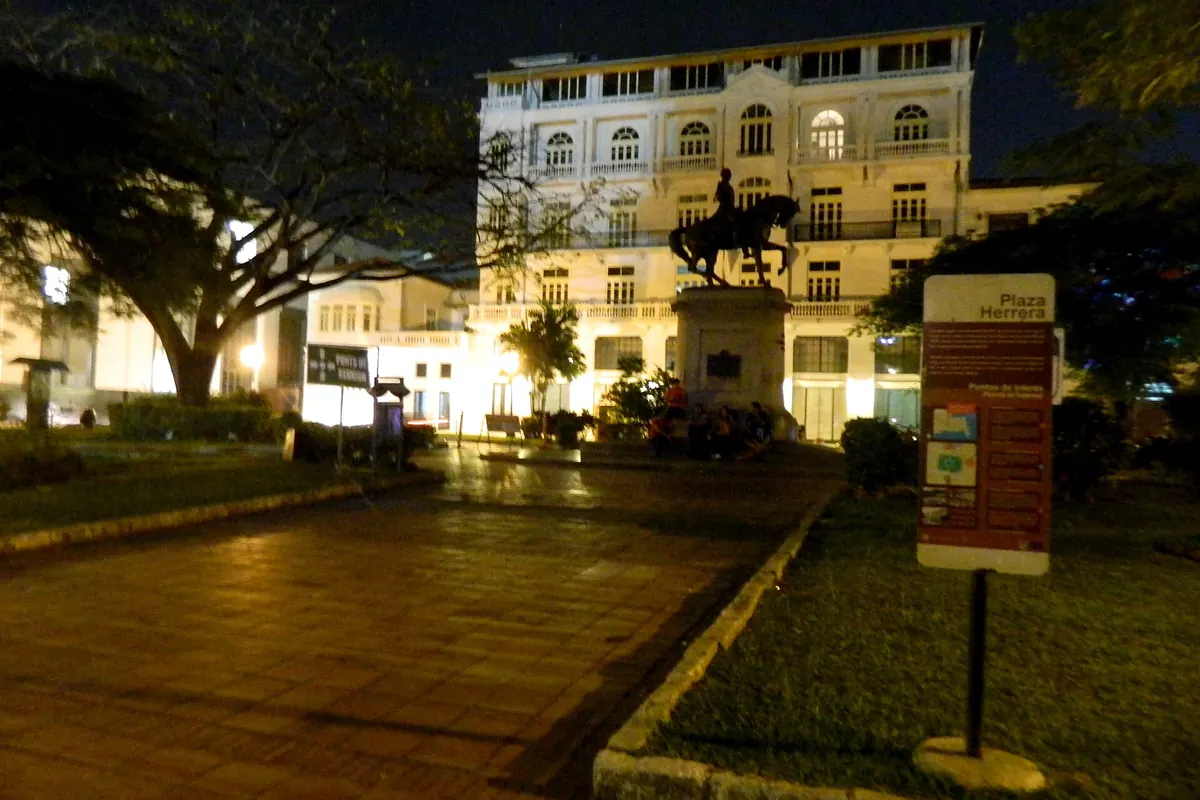
Wikipedia names the plazas Bolívar, Herrera, de Francia and de la Independencia among the district's squares, and the cathedral stands on its own Plaza de la Catedral. The Teatro Nacional, the presidential palace and the Arco Chato lie within the same compact district. A visitor who learns those names has a ready map of the old city.
The Salón Bolívar
UNESCO's name for the listing mentions the Salón Bolívar, which its listing describes as the venue of Simón Bolívar's unsuccessful 1826 attempt to found a multinational continental congress. The hall is part of why the heritage listing refers to the district's role in Latin American history and not only to its architecture.
A district in transition
Wikipedia notes that in recent years the district has become a tourist hotspot and has experienced gentrification while keeping its historic sites. Restaurants, boutique hotels, museums and nightclubs now sit among restored and unrestored buildings, so an evening in Casco Viejo is a mix of heritage and a living, changing neighbourhood.
Frequently asked questions
Is Casco Viejo the same as Panamá Viejo?
No. Panamá Viejo is the ruined first city; Casco Viejo is the quarter settled in 1673 after it was destroyed.
Why was Casco Viejo built on a peninsula?
Wikipedia describes the peninsula as isolated by the sea and protected by walls.
Is it a World Heritage site?
Yes. It is part of a UNESCO World Heritage property with Panamá Viejo; Wikipedia gives 1997 for the listing and 2003 for an extension.
Sources